
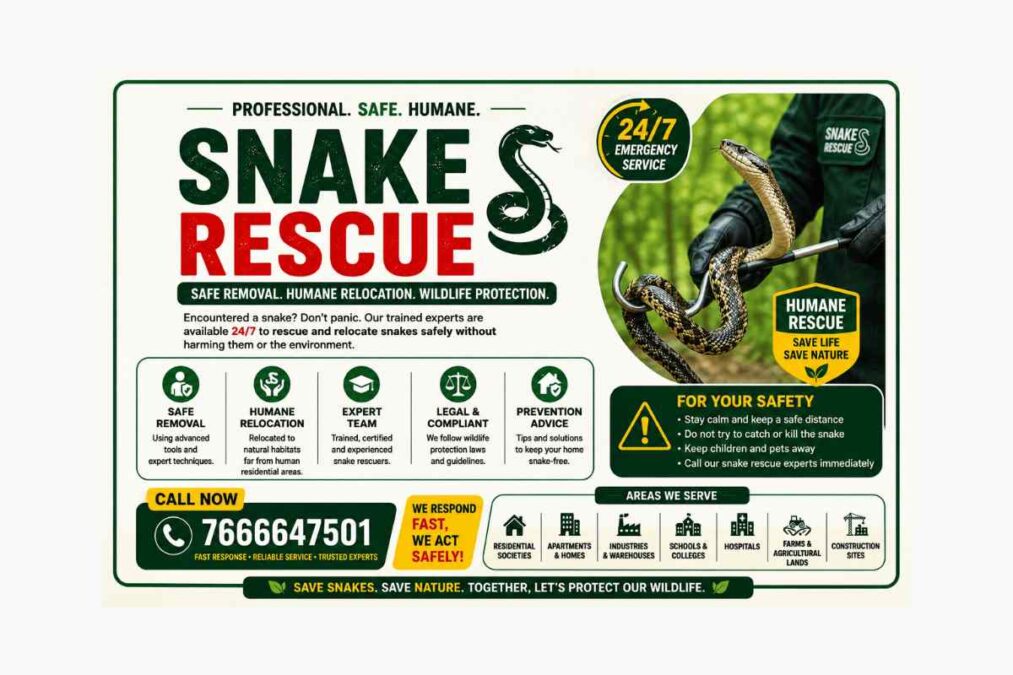
Growing Need for Professional Snake Rescue Services
As urban development continues to expand into natural habitats, encounters between humans and snakes have become increasingly common. Residential societies, industrial premises, farms, educational institutions, and commercial complexes frequently report snake sightings, especially during the monsoon season. In such situations, professional snake rescue services play a crucial role in ensuring the safety of both people and wildlife.
A trained snake rescue team can safely capture and relocate snakes without causing harm to the animal or the surrounding environment. These services help prevent panic, reduce the risk of snake bites, and support wildlife conservation efforts.
Recent Increase in Snake Rescue Operations
Wildlife experts have reported a noticeable rise in snake rescue calls over the past few years. Heavy rainfall, habitat loss, construction activities, and rising temperatures often force snakes to move into human-populated areas in search of shelter and food.
Professional snake rescue specialists are trained to identify venomous and non-venomous species, assess risks, and safely remove snakes from homes, offices, warehouses, gardens, and agricultural fields. Their expertise ensures that rescue operations are conducted efficiently while complying with wildlife protection regulations.
Why Professional Snake Rescue Is Important
Many people attempt to remove snakes themselves, often resulting in injuries or harm to the reptile. Professional snake rescue services eliminate these risks through the use of specialized equipment and proven handling techniques.
Benefits of professional snake rescue include:
- Safe removal of snakes from residential and commercial properties
- Reduced risk of snake bites and accidents
- Humane relocation of rescued snakes
- Compliance with wildlife conservation laws
- Expert identification of snake species
- Public awareness and education
A qualified team ensures that every rescue operation prioritizes human safety while protecting the ecological balance.
Common Locations Requiring Snake Rescue
Professional snake rescue services are frequently requested in:
- Residential apartments and homes
- Housing societies
- Factories and warehouses
- Schools and colleges
- Hospitals
- Agricultural fields
- Construction sites
- Gardens and parks
- Commercial buildings
- Industrial complexes
Snakes often hide in dark, cool, and undisturbed areas such as storage rooms, drainage systems, wood piles, gardens, and abandoned structures. Prompt rescue services help address such situations before they become dangerous.
Understanding Snake Behavior
One of the key aspects of successful snake rescue is understanding snake behavior. Contrary to common myths, snakes generally avoid human interaction and attack only when threatened or cornered.
Snakes may enter human environments due to:
- Search for food such as rodents and frogs
- Need for shelter during extreme weather
- Breeding and nesting activities
- Flooding of natural habitats
- Disturbance caused by construction work
Professional snake rescue experts use their knowledge of snake behavior to locate and safely remove the reptile with minimal stress.
Snake Rescue Treatment Process
A professional snake rescue operation follows a structured process to ensure safety and effectiveness.
1. Emergency Call Registration
The process begins when a resident or property manager reports a snake sighting. Details regarding the location, snake appearance, and surrounding conditions are collected.
2. Site Inspection
The rescue team arrives at the location and conducts a thorough inspection to locate the snake and evaluate potential risks.
3. Species Identification
Experts identify the species whenever possible. This helps determine the appropriate rescue strategy and safety precautions.
4. Safe Capture
Using professional tools such as snake hooks, tongs, and secure containers, trained rescuers carefully capture the snake without causing injury.
5. Secure Transportation
The rescued snake is placed in a specialized transport container designed to minimize stress and prevent escape.
6. Habitat Relocation
Following wildlife guidelines, the snake is relocated to a suitable natural habitat away from human settlements.
7. Property Assessment
The team may inspect the premises for factors attracting snakes, such as rodent infestations, clutter, or structural gaps.
8. Prevention Recommendations
Property owners receive guidance on preventing future snake encounters through habitat modification and pest management measures.
Safety Measures During Snake Rescue
Safety is the highest priority during every rescue operation. Trained professionals follow strict protocols to protect residents, staff, and the snake itself.
Key safety measures include:
- Maintaining a safe distance from the snake
- Restricting access to the affected area
- Using professional snake-handling equipment
- Wearing appropriate protective gear
- Avoiding sudden movements that may provoke the snake
- Ensuring safe containment during transportation
- Following wildlife handling regulations
- Conducting post-rescue safety inspections
Residents are advised never to attempt handling or killing a snake, as this can increase the risk of injury and violate wildlife protection laws.
Preventing Future Snake Encounters
After a successful snake rescue, preventive measures can significantly reduce the likelihood of future sightings.
Recommended practices include:
- Keeping surroundings clean and clutter-free
- Controlling rodent populations
- Sealing cracks and entry points
- Maintaining gardens and lawns
- Removing debris and wood piles
- Installing proper drainage systems
- Regular property inspections
- Professional pest control services
These preventive strategies support long-term safety and reduce the need for repeated rescue interventions.
Environmental Benefits of Snake Rescue
Professional rescue services contribute to environmental sustainability and biodiversity conservation. Snakes play an essential role in controlling rodent populations, which helps protect crops, reduce disease transmission, and maintain ecological balance.
By choosing humane snake rescue instead of killing snakes, communities support conservation efforts and help preserve local wildlife populations. Rescue and relocation ensure that snakes continue to perform their important ecological functions in natural habitats.
Importance of Public Awareness
Educational programs and awareness campaigns are essential components of effective rescue initiatives. Many fears surrounding snakes stem from misinformation and lack of understanding.
Public awareness programs typically cover:
- Snake identification basics
- Emergency response procedures
- First-aid guidance for snake bites
- Wildlife conservation importance
- Safe behavior during snake encounters
- Preventive property management
Increased awareness leads to faster reporting, safer responses, and more successful rescue outcomes.
Warranty Information
While snake rescue services focus on the immediate removal and relocation of snakes, warranty policies may vary depending on the service provider.
Typical warranty-related information may include:
- Service report documentation
- Recommendations for preventive measures
- Follow-up inspections (where applicable)
- Guidance on reducing snake attractants
- Support for recurring sightings within a specified period
Because snakes are wild animals that can move freely between locations, most rescue services do not provide a guaranteed prevention warranty. Property maintenance and preventive measures play a vital role in reducing future encounters.
Areas Served
Professional snake rescue services are commonly available across:
- Residential societies
- Independent homes
- Apartments
- Commercial complexes
- Industrial areas
- Warehouses
- Educational institutions
- Hospitals
- Agricultural farms
- Construction sites
- Government buildings
- Rural and urban locations
Many providers offer emergency snake rescue services with rapid response times to address urgent situations effectively.
Conclusion
The growing number of snake sightings in urban and rural areas highlights the importance of professional rescue services. These services ensure the safe removal and humane relocation of snakes while protecting residents and supporting wildlife conservation.
By relying on trained snake rescue experts, following safety recommendations, and implementing preventive measures, communities can coexist safely with wildlife while reducing risks associated with snake encounters.
Frequently Asked Questions (FAQs)
1. What should I do if I see a snake in my home?
Stay calm, maintain a safe distance, keep others away from the area, and immediately contact a professional rescue service.
2. Is snake rescue safe for the snake?
Yes. Professional rescue teams use humane methods to capture and relocate snakes without causing harm.
3. Can I remove a snake myself?
No. Attempting to handle a snake can result in serious injury. Always seek professional snake rescue assistance.
4. How quickly can a snake rescue team respond?
Response times vary by location, but many emergency snake rescue providers offer rapid assistance.
5. Do all snakes pose a danger?
No. Many snakes are non-venomous and play a beneficial role in controlling pests and rodents.
6. Where are rescued snakes relocated?
Rescued snakes are typically released into suitable natural habitats in accordance with wildlife regulations.
7. How can I prevent snakes from entering my property?
Maintain cleanliness, control rodents, seal entry points, remove clutter, and schedule regular inspections.
8. Is snake rescue available for commercial properties?
Yes. Professional snake rescue services are available for homes, offices, factories, warehouses, and other commercial facilities.
9. Do snake rescue services provide warranties?
Warranty policies vary by provider. Most services offer guidance and preventive recommendations rather than guaranteed prevention.
10. Why is snake rescue important?
Snake rescue protects human safety, prevents unnecessary harm to wildlife, and supports environmental conservation.
