
Ant infestations inside homes often begin with something small and seemingly harmless — a few ants
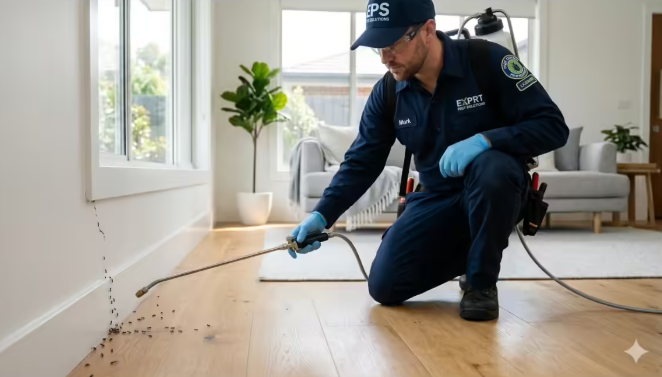
near the kitchen sink, a trail moving across the counter, or occasional insects appearing around food storage areas. Many homeowners ignore these early warning signs, believing the problem will disappear on its own. However, pest control experts warn that a small ant sighting can quickly turn into a major indoor infestation within weeks if left untreated.
Professional pest control companies use scientifically proven techniques to eliminate ant colonies effectively. According to experts, the difference between temporary DIY solutions and long-term ant control is not stronger chemicals or excessive spraying, but understanding how ants behave and survive as highly organized social insects.
Recent studies and pest management research have highlighted why modern professional treatments focus on destroying the entire colony rather than simply killing the ants visible inside homes.
Why Ant Infestations Grow So Quickly Indoors
One of the biggest mistakes homeowners make is underestimating how ants operate. Pest control specialists explain that ants function as what scientists call a “superorganism.” Instead of acting independently, every ant in a colony works together to ensure survival and expansion.
A single ant colony may contain thousands of worker ants controlled by one or more queens capable of laying hundreds or even thousands of eggs daily. Worker ants communicate through pheromone trails, creating highly organized routes to food and water sources inside homes.
When homeowners spray visible ants with household insecticides, they usually kill only a small number of foraging workers. The main colony often remains hidden inside walls, under floors, behind cabinets or outdoors near the building foundation.
Experts say this is why many DIY ant control methods fail. In some cases, spraying ants directly can even worsen the infestation because surviving ants detect danger and create new trails elsewhere in the house.
How Professional Ant Control Actually Works
Modern pest control professionals rely heavily on baiting systems instead of simple surface spraying. These baiting methods are designed to exploit the social behaviour of ants.
The strategy works by allowing worker ants to consume slow-acting poisoned bait and carry it back to the colony. Once inside the nest, the bait spreads to other workers, larvae and eventually the queen through food sharing behaviour.
Because the poison acts slowly, ants do not immediately recognize the threat, allowing the treatment to spread throughout the colony before the workers begin avoiding it.
Pest control experts explain that colony elimination is the ultimate goal. Killing only visible ants provides short-term relief but rarely solves the underlying problem permanently.
Scientific Research Supports Baiting Methods
A major study titled “An Analysis of Different Urban Pest Management Strategies Against Argentine Ants” conducted at the University of California, Riverside demonstrated the effectiveness of professional baiting techniques.
Researchers found that using fipronil-based treatments combined with baiting strategies reduced ant activity by approximately 93 percent within one week. Even after eight weeks, ant populations remained reduced by nearly 90 percent.
The study highlighted what researchers described as the “transfer effect,” where poisoned ants unknowingly spread the toxicant throughout the colony before dying. This method proved significantly more effective than traditional spraying approaches focused only on surface activity.
Lead researcher J.H. Klotz noted that successful ant management depends on targeting colony behaviour rather than individual insects.
The findings have influenced modern urban pest management practices worldwide, especially in cities where indoor ant infestations are increasingly common.
Why Kitchens and Bathrooms Attract Ants
Experts say ants are usually attracted indoors by three basic necessities — food, water and shelter.
Kitchens are one of the most common infestation sites because even small food crumbs, sugary spills or improperly sealed containers can attract scouting ants. Bathrooms and sinks also provide moisture sources that many ant species require to survive.
Once ants discover a reliable food or water source, they leave pheromone trails that guide other colony members directly to the location. Over time, these trails become larger and more organized, leading to full infestations inside homes.
Professionals recommend immediate action when the first signs of ants appear rather than waiting for the problem to worsen.
Common DIY Mistakes Homeowners Make
Pest control specialists frequently warn homeowners against relying entirely on over-the-counter sprays for indoor ant problems.
Some of the most common mistakes include:
Spraying Only Visible Ants
This removes foragers temporarily but leaves the colony intact.
Using Multiple Chemicals Together
Mixing treatments can interfere with bait effectiveness and make ants avoid treated areas.
Destroying Ant Trails Too Quickly
Cleaning trails immediately after applying bait can prevent worker ants from carrying poison back to the colony.
Ignoring Outdoor Colonies
Many indoor infestations originate from nests outside the home near cracks, foundations or gardens.
Experts say professional inspections help identify hidden nesting areas and the specific ant species involved, allowing for more targeted treatment plans.
Importance of Professional Pest Control
Professional pest management companies use a combination of inspection, species identification, bait placement and long-term monitoring to control infestations effectively.
Unlike DIY products, professional treatments are designed to address both immediate activity and future colony prevention. Technicians also understand how different ant species respond to different bait formulas and environmental conditions.
In humid urban areas where pests thrive year-round, routine pest management has become increasingly important for homeowners and businesses alike.
In cities like Mumbai, indoor ant and cockroach infestations are especially common due to dense housing conditions, humidity and constant access to food sources. Many residents now rely on professional pest control services to maintain hygiene and prevent recurring infestations.
Companies such as Pestokillz Pest Control provide specialized treatments for ants, cockroaches and other urban pests using targeted pest management techniques designed for residential and commercial properties.
Prevention Remains the Best Long-Term Solution
While professional treatments can eliminate existing infestations, experts say prevention remains the most effective long-term strategy.
Homeowners are advised to:
- Store food in airtight containers
- Clean kitchen surfaces regularly
- Fix leaking pipes and moisture problems
- Seal cracks around windows and doors
- Remove standing water sources
- Dispose of garbage properly
Regular maintenance combined with professional inspections can significantly reduce the chances of recurring infestations.
Conclusion
Ant infestations may begin with only a few insects on a kitchen counter, but experts warn they can rapidly grow into large colony problems if ignored. Scientific research now shows that effective pest control depends on understanding ant behaviour and targeting entire colonies rather than individual ants.
Modern professional pest control methods, especially baiting systems, have proven far more successful than traditional DIY sprays. By exploiting the ants’ own social behaviour, professionals can eliminate colonies at the source and provide longer-lasting protection for homes and businesses.
As urban pest problems continue to increase, homeowners are increasingly turning to expert pest management services for safer and more effective solutions against indoor ant infestations.
