
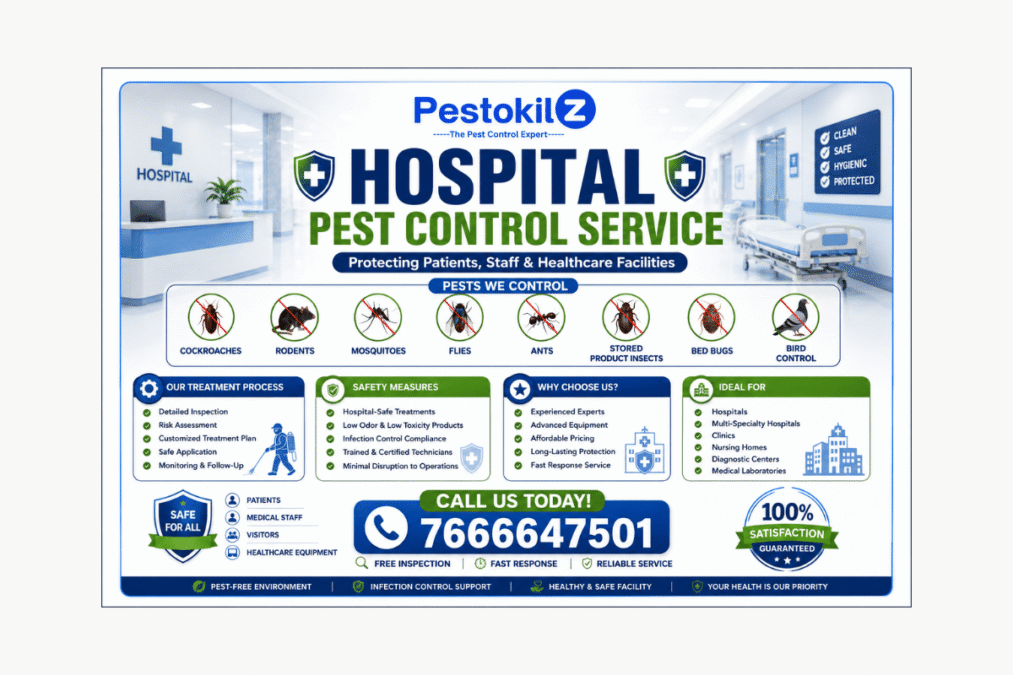
Hospitals are among the most sensitive environments where cleanliness, hygiene, and patient safety are of utmost importance. The presence of pests such as cockroaches, rodents, ants, flies, mosquitoes, termites, and bed bugs can pose serious health risks and compromise healthcare standards. A professional Hospital Pest Control Service helps healthcare facilities maintain strict hygiene standards, prevent pest infestations, and protect patients, staff, and visitors from pest-related hazards. Regular pest management is essential for ensuring infection control and compliance with healthcare regulations.
Why Hospital Pest Control Service Is Essential
Hospitals operate around the clock and contain multiple areas such as patient wards, operation theatres, laboratories, kitchens, pharmacies, storage rooms, and waste disposal zones. These environments can attract pests if proper preventive measures are not in place. A reliable Hospital Pest Control Service helps prevent contamination, disease transmission, equipment damage, and reputational harm. Effective pest management ensures a safe environment where healthcare professionals can focus on patient care without interruptions caused by pest infestations.
Common Pests Found in Hospitals
Healthcare facilities can encounter various pests that threaten hygiene and safety. Cockroaches often hide in warm and moist areas and can spread harmful bacteria. Rodents contaminate food and medical supplies while damaging wiring and infrastructure. Flies and mosquitoes carry pathogens that can affect vulnerable patients. Ants invade food storage and patient areas, while termites may damage wooden furniture and structures. Bed bugs can occasionally infest patient rooms and waiting areas. A comprehensive Hospital Pest Control Service is designed to eliminate these pests and prevent future infestations.
Risks Associated with Pest Infestations in Hospitals
Pest infestations can lead to serious consequences in healthcare environments. Pests can spread bacteria, viruses, and allergens, increasing the risk of healthcare-associated infections. Contaminated medical supplies, damaged records, and compromised patient safety can result in regulatory violations and financial losses. A professional Hospital Pest Control Service minimizes these risks through proactive monitoring and targeted treatments.
Signs Your Hospital Needs Pest Control
Several warning signs indicate the need for immediate Hospital Pest Control Service. These include pest sightings in patient wards, rodent droppings, cockroach activity in kitchens or storage rooms, fly infestations near waste disposal areas, unusual odors, damaged packaging, and complaints from patients or staff. Early intervention is crucial to prevent widespread infestations and maintain healthcare standards.
Benefits of Professional Hospital Pest Control Service
A professional Hospital Pest Control Service provides numerous benefits to healthcare facilities. It helps maintain hygiene, protects patients and healthcare workers, prevents contamination of medical supplies, supports infection control protocols, and ensures compliance with healthcare regulations. Routine pest management also reduces operational disruptions and protects the hospital’s reputation.
Hospital Pest Control Service Treatment Process
The treatment process begins with a comprehensive inspection of the hospital premises. Pest control experts assess patient wards, operation theatres, laboratories, kitchens, pharmacies, storage rooms, and waste disposal zones to identify pest activity and entry points.
After inspection, a customized Hospital Pest Control Service plan is developed based on the specific needs of the facility. Treatment methods may include gel baiting, rodent control systems, insect monitoring devices, targeted residual treatments, fly control units, and integrated pest management solutions.
Once treatment is completed, technicians conduct follow-up inspections to ensure effectiveness and monitor for any recurring pest activity. Preventive maintenance programs are then implemented to provide long-term protection.
Safety Measures During Hospital Pest Control Service
Safety is the highest priority during any Hospital Pest Control Service. Professional pest control providers use healthcare-approved products and treatment methods that minimize risks to patients and medical staff. Treatments are carefully scheduled to avoid disruption of critical healthcare operations.
Key safety measures include the use of low-odor and low-toxicity products, targeted applications, strict adherence to infection control guidelines, proper documentation, and the use of personal protective equipment by technicians. Sensitive areas such as operation theatres, intensive care units, and laboratories receive specialized attention to ensure complete safety.
Integrated Pest Management for Hospitals
Modern Hospital Pest Control Service programs utilize Integrated Pest Management (IPM) strategies. IPM combines inspections, sanitation improvements, exclusion techniques, monitoring systems, and targeted treatments to achieve long-term pest prevention. This environmentally responsible approach reduces pesticide usage while maximizing effectiveness and safety.
Preventive Measures for Hospital Pest Management
Hospital administrators can strengthen pest prevention efforts by maintaining cleanliness, ensuring proper waste disposal, repairing water leaks, sealing cracks and entry points, and conducting regular inspections. Staff training programs can also help identify early signs of pest activity. When combined with professional Hospital Pest Control Service, these measures significantly reduce the risk of infestations.
Specialized Pest Control for Healthcare Facilities
Different hospital areas require specialized pest management approaches. Patient wards demand discreet treatments that do not disturb patients. Kitchens and cafeterias require food-safe pest control methods. Laboratories and pharmacies need extra precautions to protect sensitive equipment and supplies. A customized Hospital Pest Control Service addresses the unique requirements of each area within the healthcare facility.
Warranty Information
Most professional Hospital Pest Control Service providers offer warranties and service guarantees. Warranty coverage may include free follow-up visits, additional treatments if pest activity returns, and ongoing monitoring support. Warranty duration depends on the treatment type, facility size, and service agreement. Hospitals should review warranty terms carefully to understand coverage and maintenance requirements.
Areas Served
Professional Hospital Pest Control Service providers typically serve:
- Government Hospitals
- Private Hospitals
- Multi-Specialty Hospitals
- Medical Colleges
- Clinics
- Nursing Homes
- Diagnostic Centers
- Healthcare Laboratories
- Rehabilitation Centers
- Specialty Care Facilities
Services are available across metropolitan cities, suburban regions, industrial zones, and healthcare hubs to ensure comprehensive coverage.
Why Choose Professional Hospital Pest Control Service
Professional pest control companies have the expertise, equipment, and industry knowledge required to manage pests in healthcare environments. Certified technicians understand infection control requirements and implement treatments that prioritize patient safety. A trusted Hospital Pest Control Service provider delivers customized solutions, regular monitoring, emergency response support, and long-term prevention strategies.
Conclusion
A professional Hospital Pest Control Service is essential for maintaining a clean, safe, and hygienic healthcare environment. Effective pest management protects patients, staff, visitors, medical equipment, and hospital infrastructure from pest-related risks. Through routine inspections, targeted treatments, preventive maintenance, and integrated pest management strategies, hospitals can ensure compliance with healthcare standards and provide high-quality patient care in a pest-free environment.
Frequently Asked Questions (FAQs)
Q1. What is Hospital Pest Control Service?
Hospital Pest Control Service is a specialized pest management solution designed to prevent and eliminate pests from hospitals, clinics, laboratories, and healthcare facilities.
Q2. Why is pest control important in hospitals?
Pest control helps prevent disease transmission, contamination, and safety risks while maintaining hygiene standards and regulatory compliance.
Q3. Is Hospital Pest Control Service safe for patients?
Yes. Professional providers use healthcare-approved treatment methods and follow strict safety protocols to protect patients and staff.
Q4. How often should hospitals schedule pest control services?
Most hospitals benefit from monthly inspections and routine preventive treatments.
Q5. Which pests are commonly found in hospitals?
Cockroaches, rodents, flies, mosquitoes, ants, termites, and bed bugs are common healthcare facility pests.
Q6. Does Hospital Pest Control Service include follow-up visits?
Yes. Most service plans include monitoring, inspections, and follow-up treatments if necessary.
Q7. Are warranties available for hospital pest control treatments?
Many providers offer warranties and service guarantees depending on the treatment package.
Q8. Can pest control be performed without disrupting hospital operations?
Yes. Treatments are carefully planned and scheduled to minimize disruption while ensuring patient safety.
